
Retaining Wall Drainage in Charlotte, NC
Water pressure is one of the fastest ways to destroy a retaining wall. In Charlotte clay soil, drainage cannot be an afterthought — it is part of the structure.
When this service makes sense
Retaining wall work should be chosen around the actual site condition: slope, soil, water movement, access, height and load.
Best for
- Walls with water pooling behind them
- Leaning or bulging walls
- Clay-heavy yards
- Downspout runoff near walls
- Repair/rebuild projects
Hydrostatic pressure behind the wall
We inspect the site and build the recommendation around the cause, not a one-size-fits-all wall.
No drain pipe outlet
We inspect the site and build the recommendation around the cause, not a one-size-fits-all wall.
Clogged gravel/fabric
We inspect the site and build the recommendation around the cause, not a one-size-fits-all wall.
Downspouts dumping behind wall
We inspect the site and build the recommendation around the cause, not a one-size-fits-all wall.
Soggy soil and washout
We inspect the site and build the recommendation around the cause, not a one-size-fits-all wall.
How we approach the project
The visible wall is only one part of the job. The base, drainage, reinforcement and grading determine how well the wall performs over time.
Identify water source
Expose or evaluate wall backfill
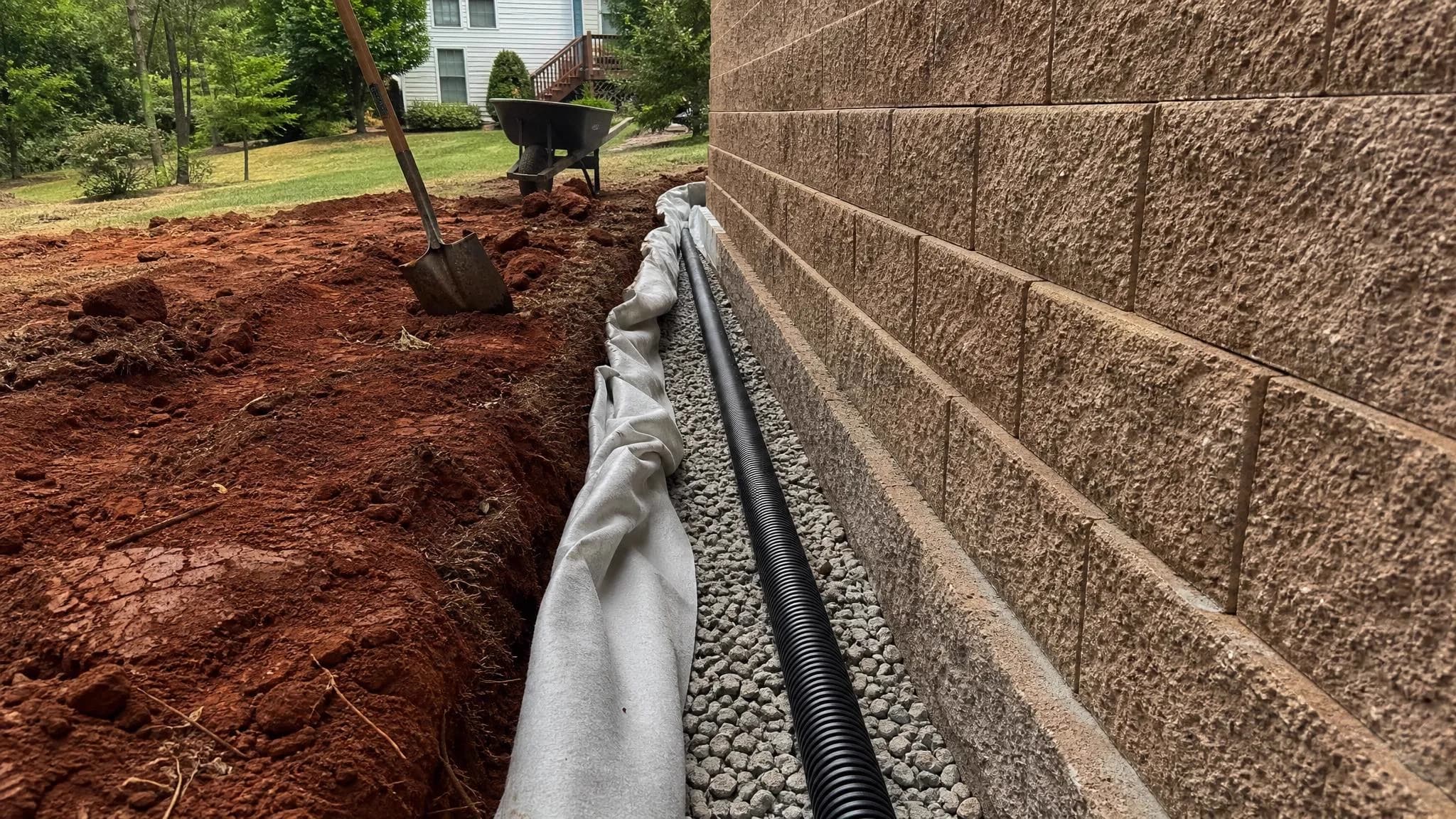
Install/repair drain pipe and gravel
Redirect downspouts and runoff
Regrade for positive drainage
Drainage is not optional here.
In Charlotte, heavy rain and clay soil can push hard against walls. That is why we focus on compacted base prep, clean stone, filter fabric, pipe outlets and grading that moves water away from the wall.
Drainage FAQs
What is the best drainage behind a retaining wall?
A typical system includes clean drainage stone, filter fabric, perforated pipe, proper outlets and grading that directs water away from the wall.
Can drainage be added to an existing wall?
Sometimes. Access and wall condition determine whether drainage can be retrofitted or whether rebuilding is the better solution.
Why is clay soil hard on retaining walls?
Clay holds water, expands when wet and creates heavy lateral pressure. That pressure pushes walls forward when drainage is poor.
Keep researching your wall options
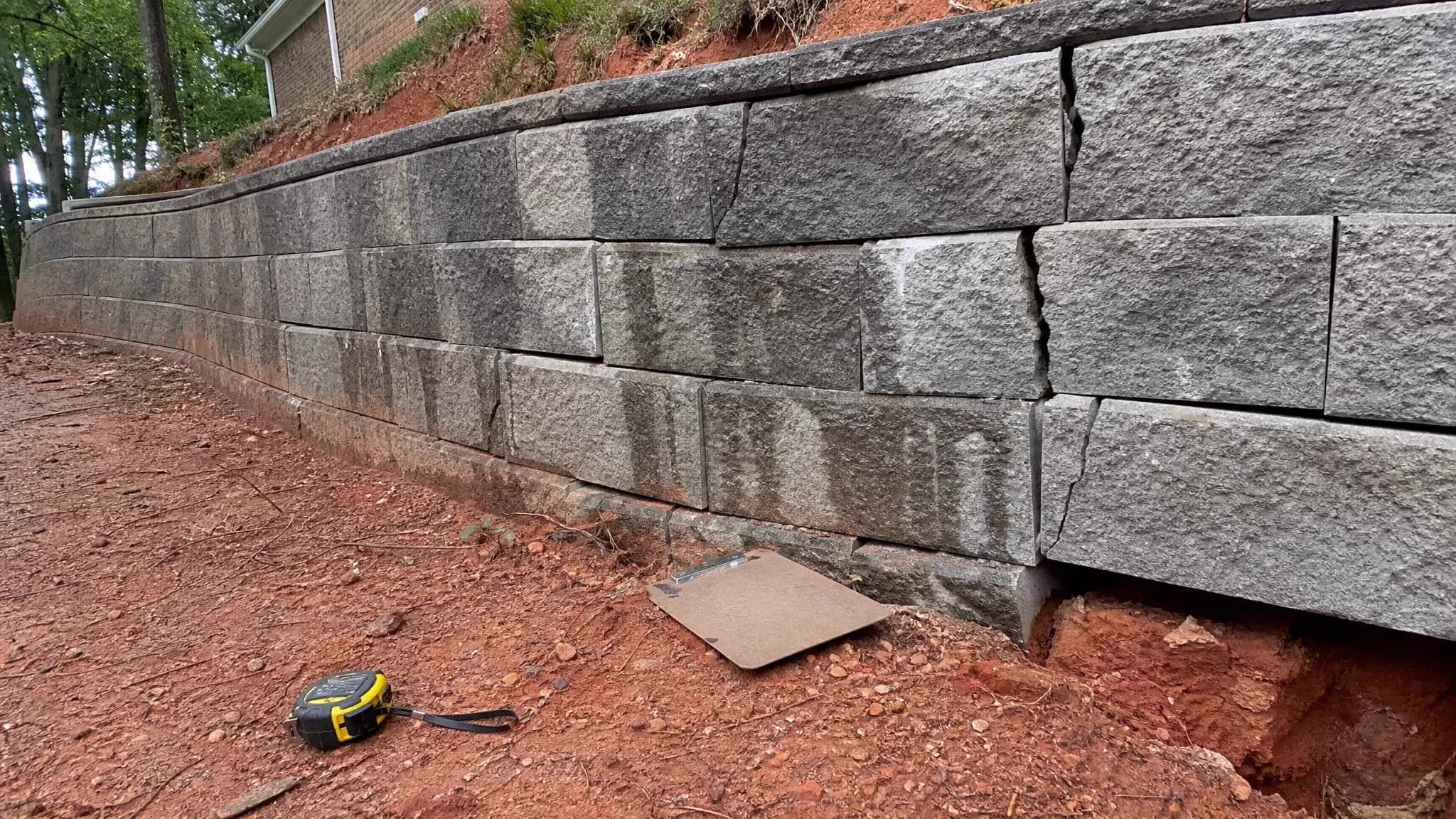
Retaining Wall Repair in Charlotte, NC
If a retaining wall is leaning, bulging, cracking or holding water behind it, the problem is usually deeper than the face of the w...
Read more →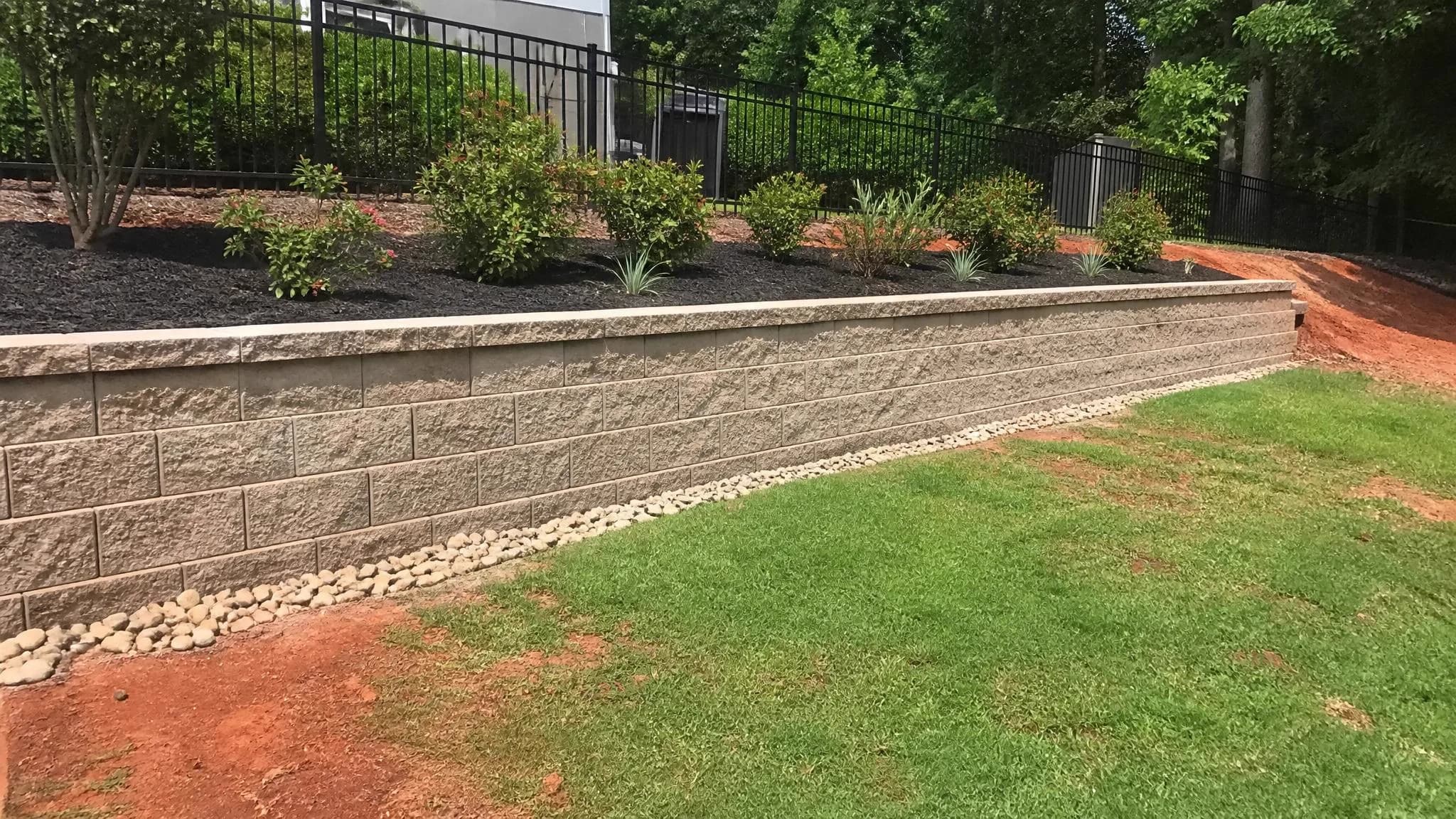
Block Retaining Walls in Charlotte, NC
Segmental block retaining walls are one of the best all-around choices for Charlotte homes because they look clean, drain well whe...
Read more →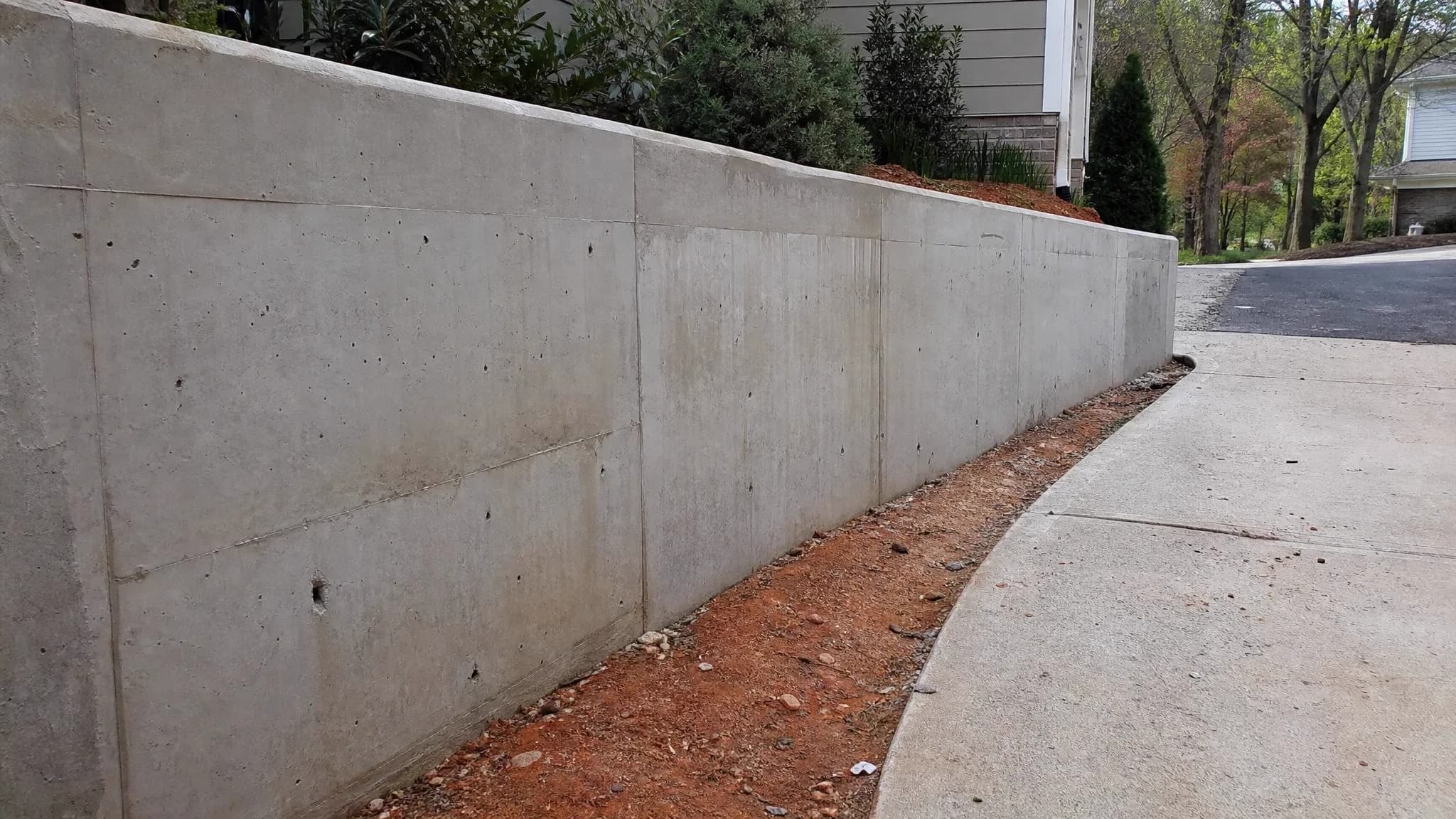
Concrete Retaining Walls in Charlotte, NC
Concrete retaining walls are a strong choice when the wall needs to support heavier loads, tight spaces, driveways, steep grades o...
Read more →